Chord detection, live
Hold three or more notes and the name appears. It covers majors, minors, sevenths, suspensions and inversions, and shows the alternative readings when there are any.
Keyriff names the chord you’re playing, remembers the ones you like, and turns them into a practice sheet you can play back.
Click a few keys. Click a lit one to release it.
The keyboard above is the quick version. The app adds everything you’d want once you’ve found a chord worth keeping.
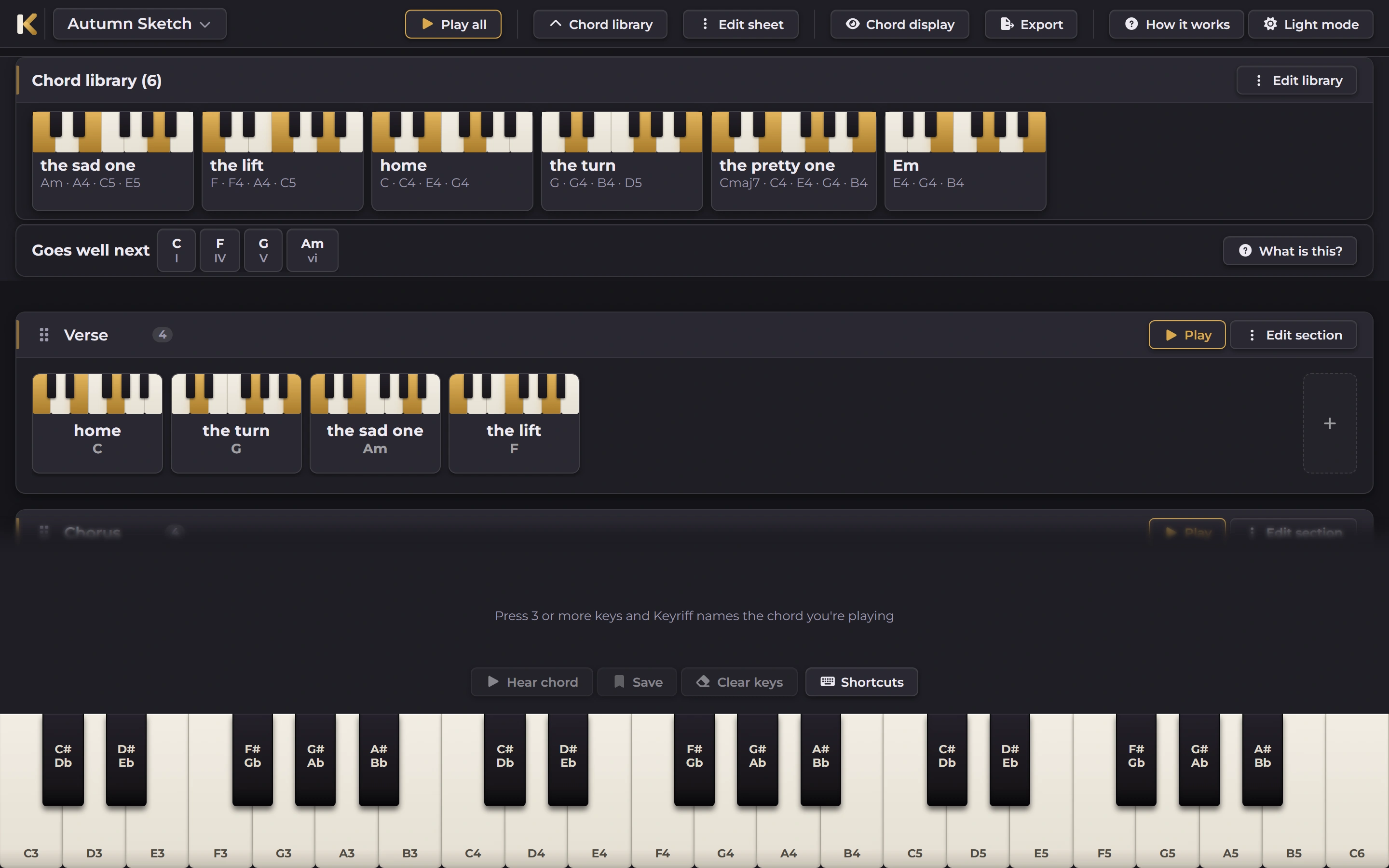
Press three or more keys with the mouse, a touchscreen, or your computer keyboard. The name appears as you play.
Save the ones you want to keep. You can rename them too, so “the sad one” works as well as Cmaj7.
Drag saved chords into sections, set the tempo and the repeats, then press play and follow along on the keyboard.
This is the whole product as it stands today. Nothing on the list is held back for a bigger version, and nothing on it is going away.
Hold three or more notes and the name appears. It covers majors, minors, sevenths, suspensions and inversions, and shows the alternative readings when there are any.
Hold a chord and a “Goes well next” row offers the ones that usually follow it, drawn from the key your sheet is in and labelled with the numeral each one plays. Tap one to put it under your hands.
Save a chord and rename it to whatever you'll recognise later. You can reorder the library, reuse a chord anywhere, and drag it straight into a sheet.
Arrange chords into named sections and play the whole thing back with sampled piano. The keys light up in time with it.
There's one tempo for the sheet, an override per section, and another for the single chord that keeps tripping you up.
An octave sits under your fingers, A to K for the white keys and the row above for the black ones, so you can find chords without reaching for the mouse.
Export a sheet with a small keyboard diagram for every chord. It's yours to keep, with no account attached to it.
Back up every sheet and your whole chord library to a single file, and open it again to put it all back. Nothing here is uploaded, so this is the copy that survives clearing your browsing data.
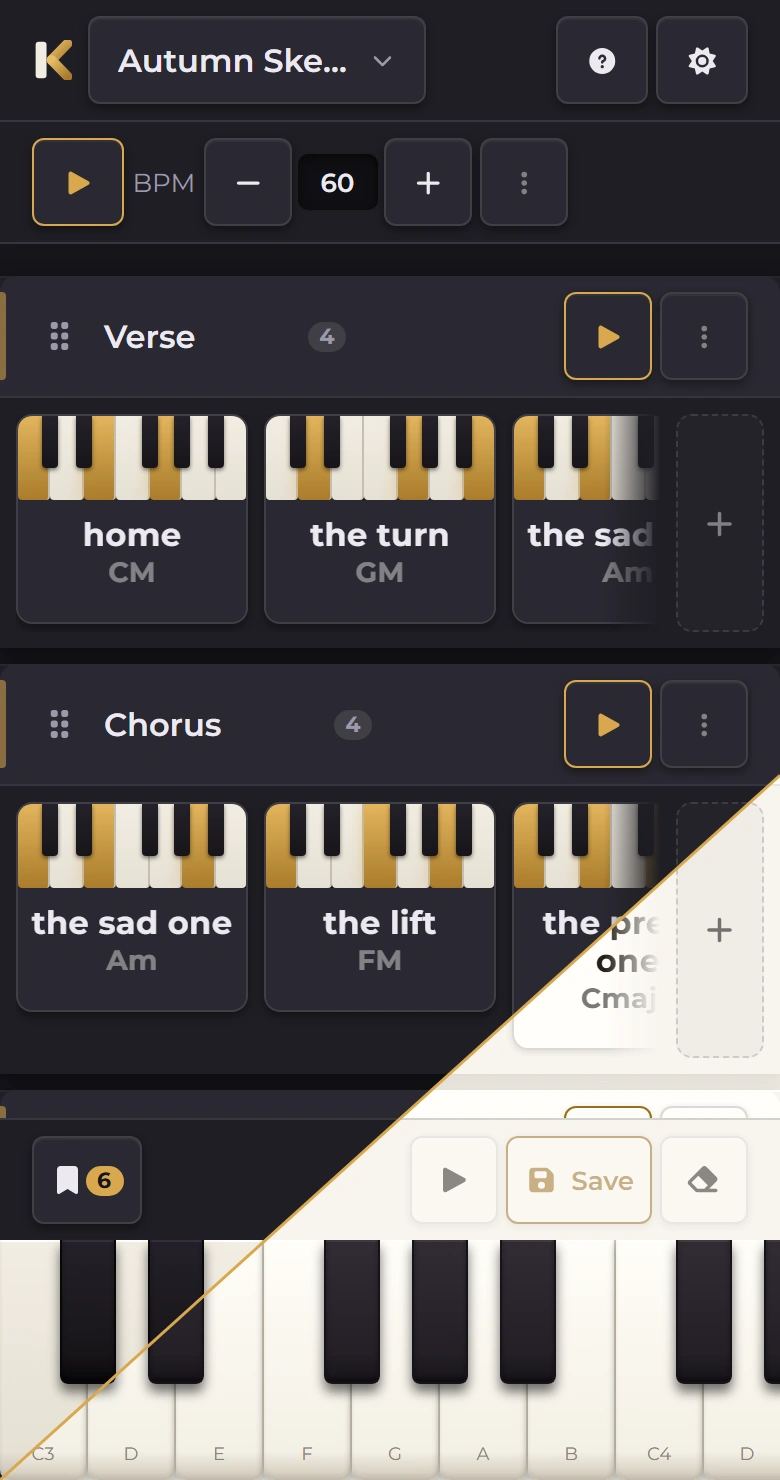
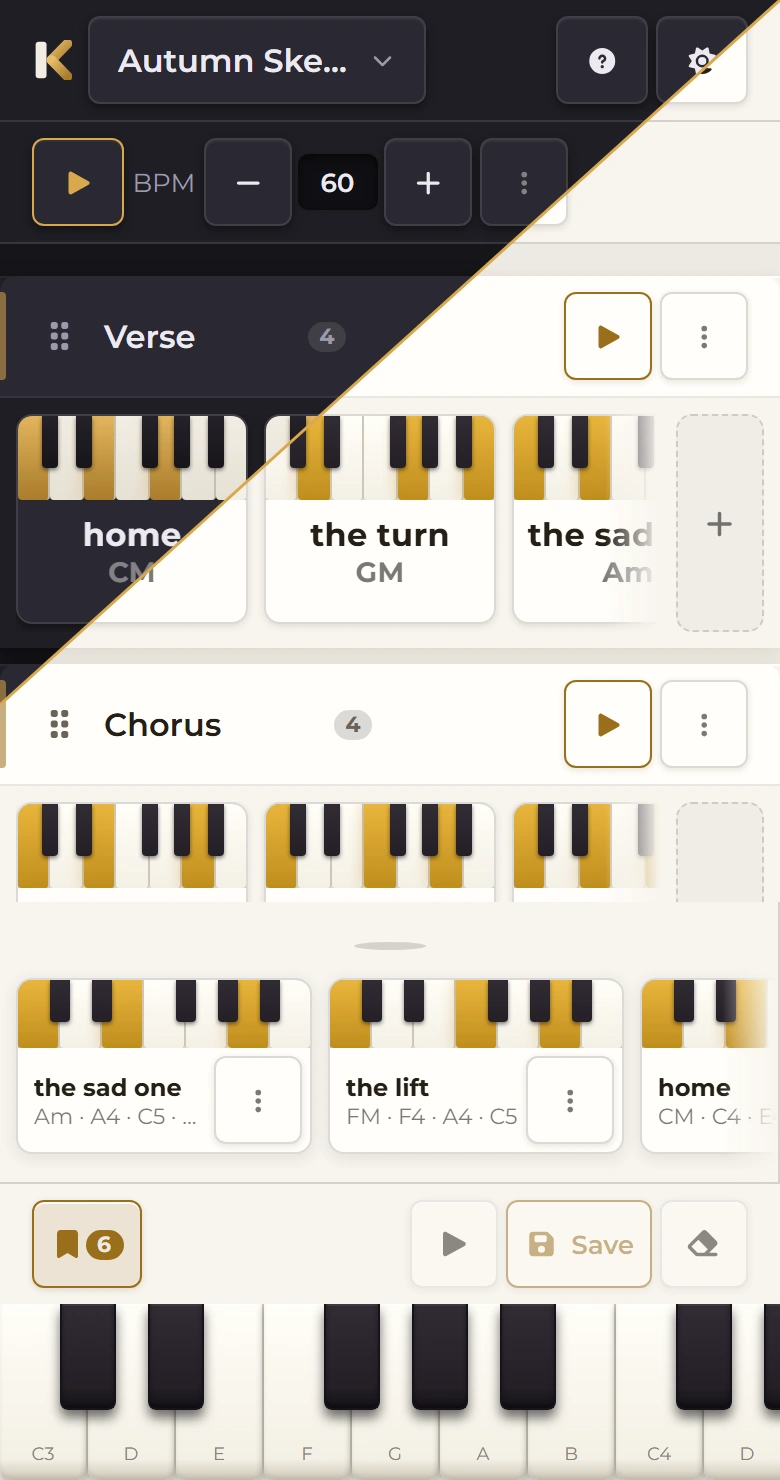
The keyboard scrolls, a section reads left to right like a bar of music, and every control is a real touch target.
The same sheets, the same library, the same PDF export. Nothing is held back for the desktop.
Saved chords sit in a tray at the top of the sheet, so the keys and the controls never get covered while you work.
A swipe scrolls the row; holding a chord card picks it up, so you can move it to another section.

Scan to open it on your phoneapp.keyriff.com
app.keyriff.com
The one you keep playing but have never looked up. It takes about four seconds.
Open the app